

Begin With the Feeling
The quiz gives you direction. The feeling gives you clarity.

Most people think they’re stuck because they haven’t chosen the right style.
So they take the quiz.
They save more inspiration.
They toggle between two aesthetics.
And somehow… they feel more unsure.
But the problem usually isn’t the style. It’s that they haven’t decided how they want their home to feel. Because you can execute the exact same aesthetic in completely different ways, and end up with two entirely different emotional experiences.
One can feel grounding and cocooning. Another can feel airy and serene. Same category. Different outcome.
And if this sounds like you, don’t worry! This is exactly where most people get tripped up. The good news? We’re going to fix that by shifting the question
Where We Actually Begin
In every project we design at Clouz Houz (no matter the location, architecture, or aesthetic) we begin the same way:
Not with the look.
Not with the materials.
Not with the furniture.
With the feeling.
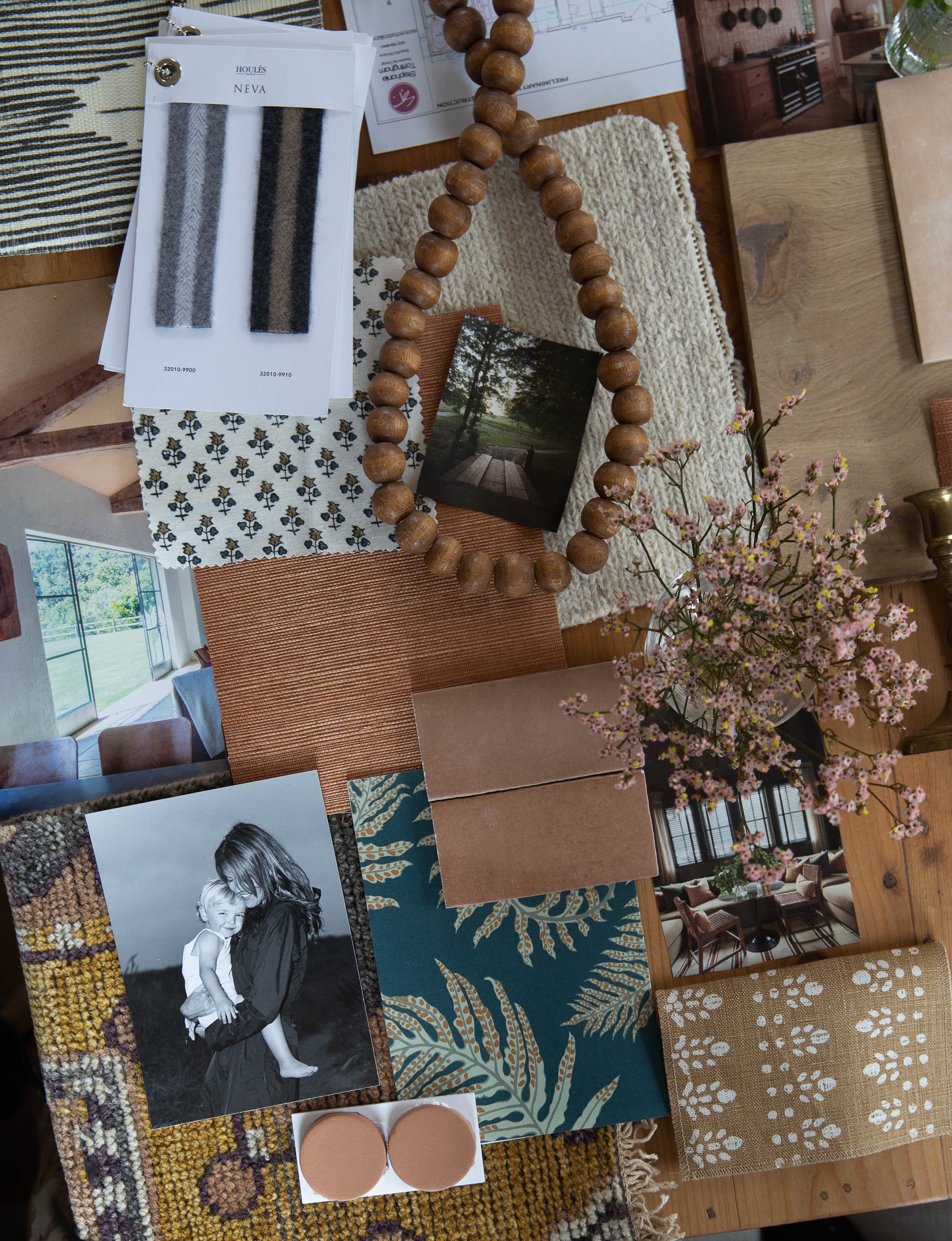
Before we source a single piece, we define the emotional direction.
Do we want this home to feel enveloping?
Restorative?
Elevated?
Playful?
Quiet?
Confident?
Once the feeling is defined, the aesthetic becomes a tool — not a label.
People assume that if two homes fall under the same style category, they should feel similar. But that’s rarely true. Let me show you what I mean.
Below are two homes that technically blend the same aesthetic — what most people would label mountain modern.


On paper:
Similar architectural language
Similar stylistic references
Similar material families
And yet, they feel completely different.
Home One: Grounded + Cocooning
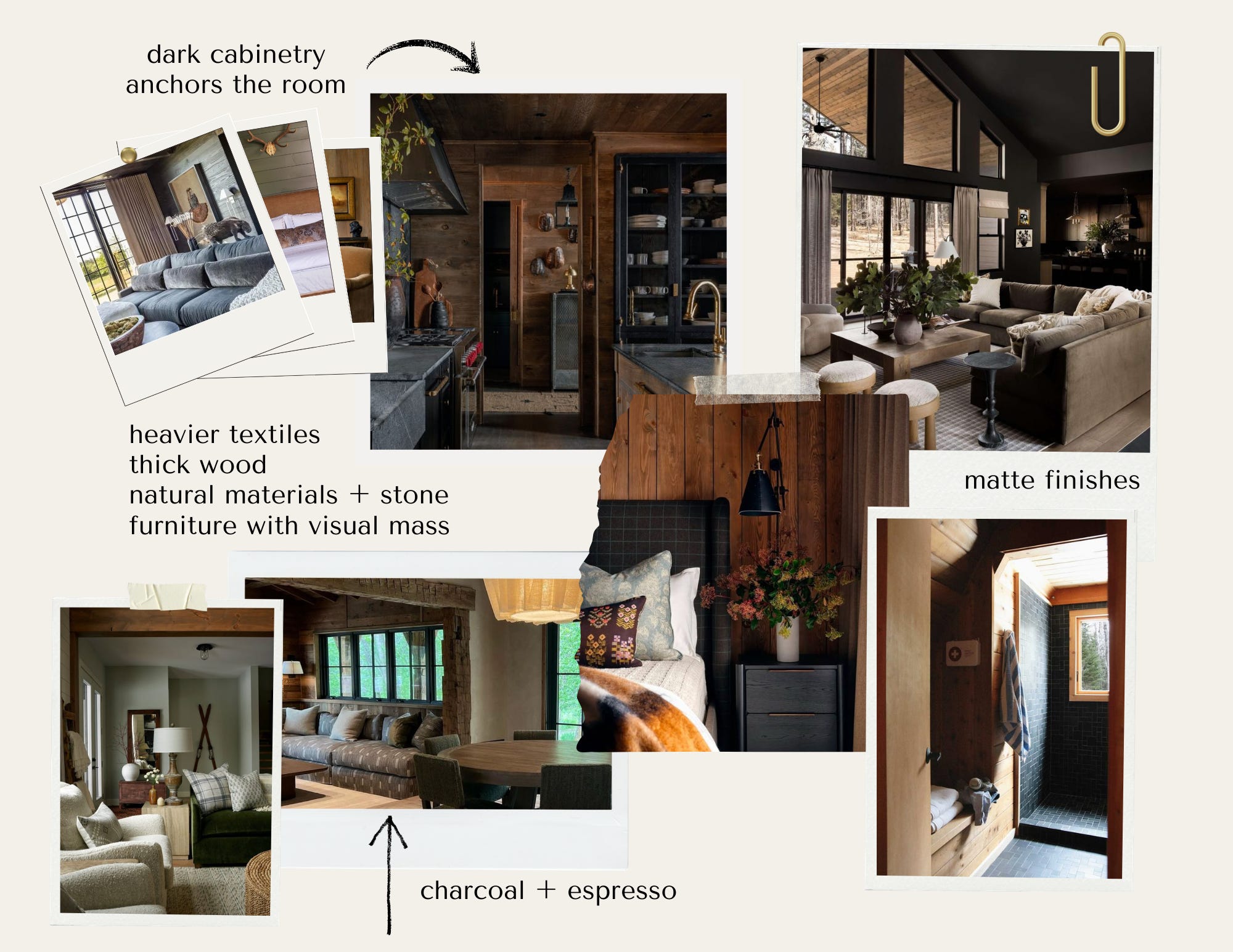
This home leans into depth.
The woods are richer. The tones are deeper. There’s more contrast between materials. The finishes have weight.
You’ll notice:
Walnut or darker-stained oak
Charcoal, espresso, and warm black accents
Upholstery with texture and substance
Stone with depth and variation
Lower lighting levels
Architectural shadows
Nothing here is accidental.
The contrast creates intimacy. The material weight creates permanence. The darker ceiling tones visually lower the volume of the room — which makes it feel cozy and able to be settled into.
Home Two: Light + Serene
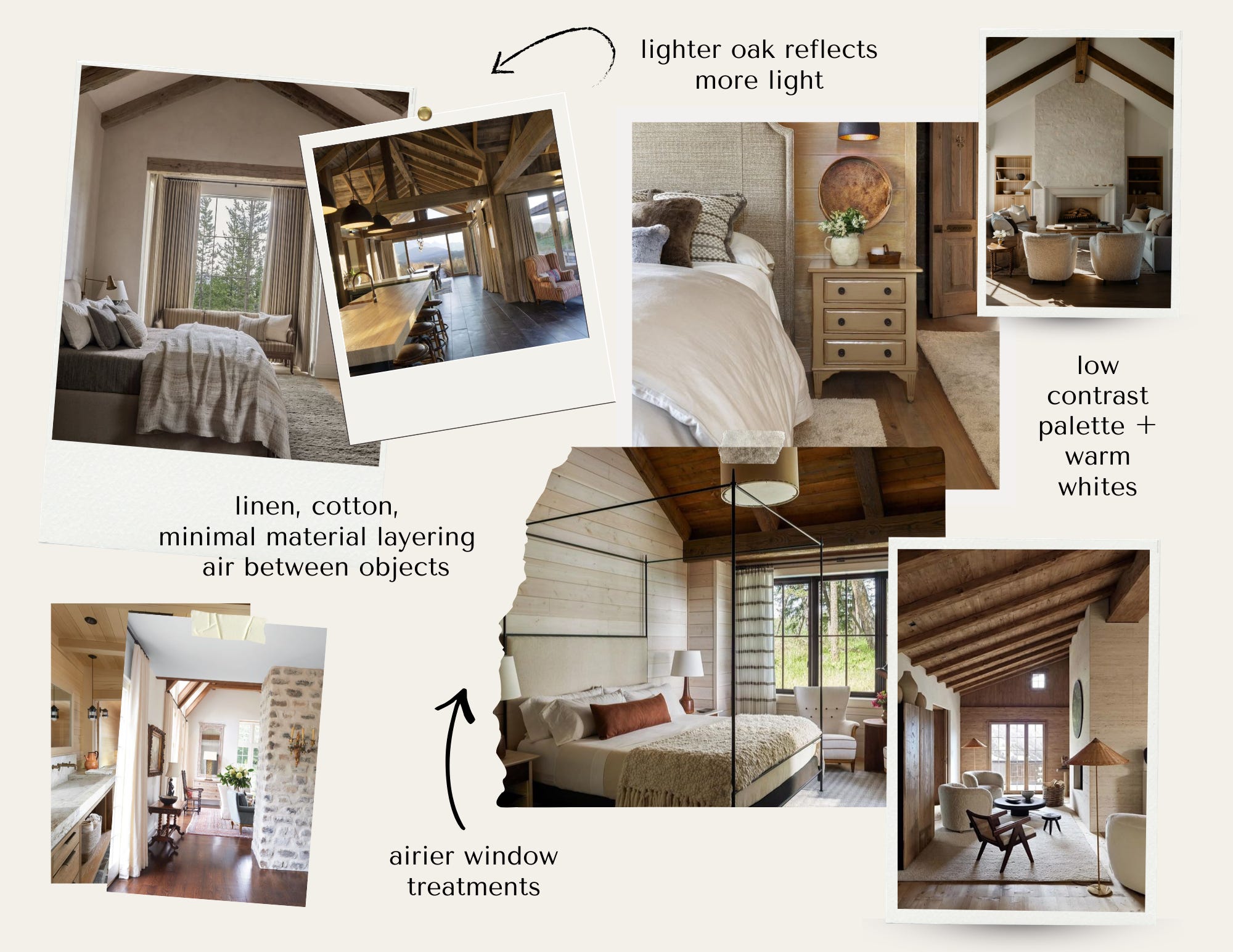
Here, the materials shift just slightly — but the feeling changes entirely.
You’ll notice:
Lighter oak or washed woods
Warm whites instead of high-contrast darks
Airier fabrics (linen, lighter-weight wool)
Softer contrast between surfaces
Materials that reflect more light
A more restrained tonal range
The architecture might be similar. The references might overlap. But the emotional goal was different. It’s not cocooning… it’s calming. And that’s the difference.
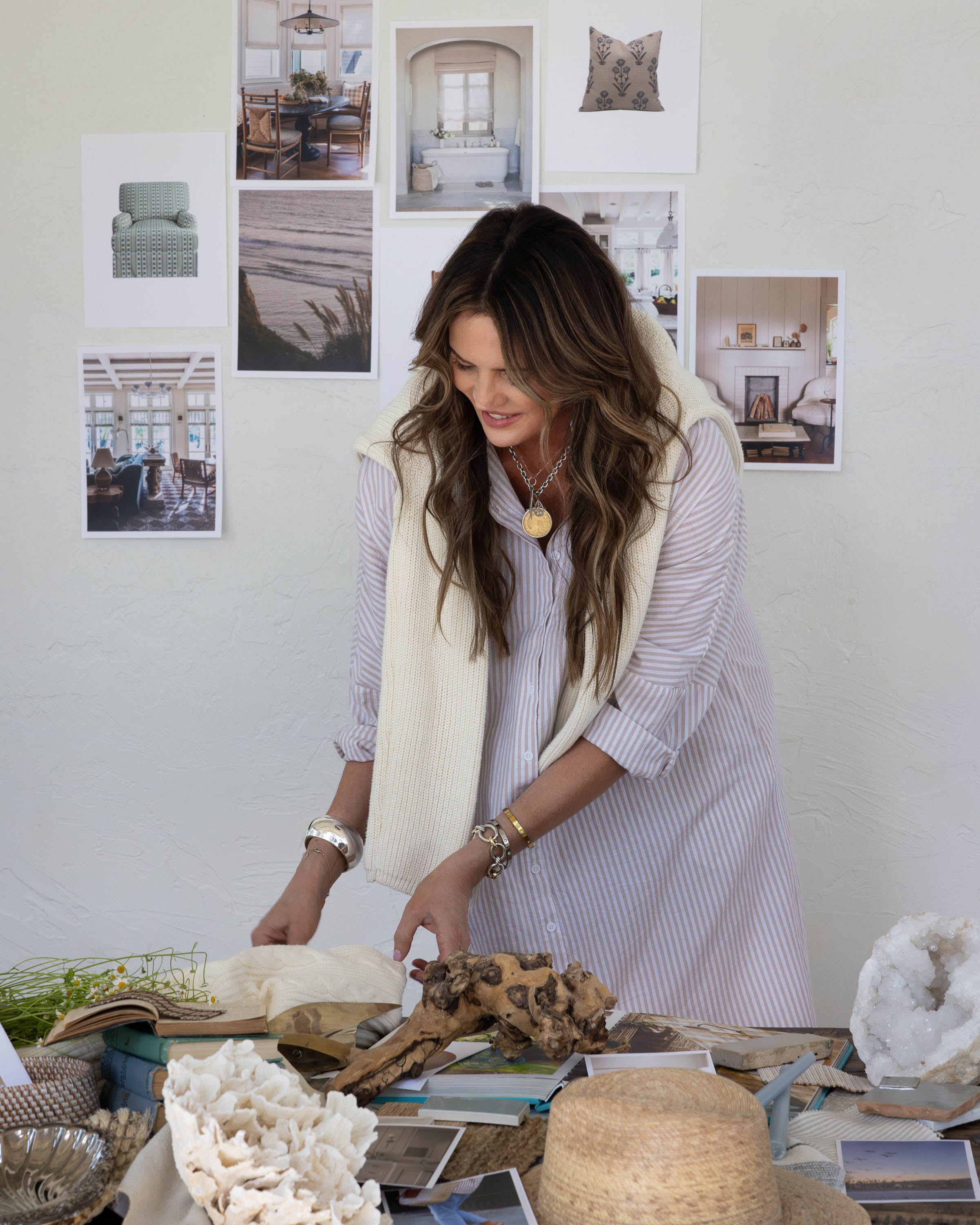
If you’re stuck between aesthetics, here’s the solution:
Ask yourself, “How do I want to feel when I walk through the door?”
Do you want:
Energy or quiet?
Intimacy or expansiveness?
Drama or softness?
Structure or fluidity?
Once that’s clear, your decisions get easier.
Because then:
Darker stain vs lighter oak isn’t random
Matte black vs aged brass isn’t trend-based
Linen vs velvet isn’t aesthetic
They’re emotional tools. You’ll be surprised how quickly clarity appears once you’ve established a feeling… Hope that helps!